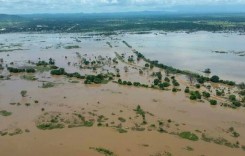
The Low Pressure Area moving over southern Mindanao that brought heavy rainfall on 11-12 January has also affected the southern Visayas, raising concerns about people affected by Typhoon HAIYAN in these areas, who are still living in temporary shelters.
It has now been reported that at least 22 people have died and 13 are missing in floods and landslides which have displaced 25,634 people in 16 municipalities and two cities in the Eastern Philippines.
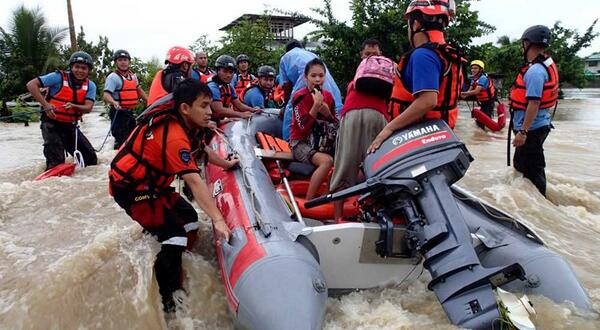
Most of the dead are from Compostela Valley and Davao Oriental, the same provinces affected by Typhoon Pablo in 2012. Other fatalities and missing persons were also recorded in Agusan del Sur in the Caraga Region.
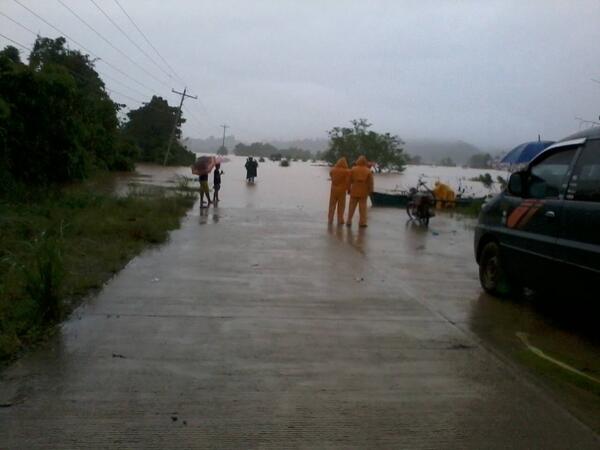
In Davao, the Saug River and the Libuganon River have flooded and the irrigation dam in Aragon has overflowed.
533 families were evacuated by the Tagum City Disaster Risk Reduction and Management Office as floodwaters submerged their homes. City Information Officer Cromwell Bonghanoy said relief packs containing foodstuffs were supplied to the affected families.
Davao Oriental towns facing the Pacific Ocean have been isolated after floodwaters damaged bridges, while the continuing bad weather affecting the region has made access by air and sea difficult. The damaged bridges are Lumao Bridge in Cateel, Manurigao and San Isidro Bridges of Caraga town, Baugo Bridge in Baganga, and another bridge in Manay. Towns from Manay to Boston are unreachable from the capital City of Mati, while each town is isolated all the others.
The NDRRMC, in its 6 a.m. Tuesday update, recorded that 34 roads and 17 bridges were damaged by heavy flooding and landslides and remain impassable.
Information from the Provincial Government of Davao Oriental indicated that a navy vessel departed on Sunday night with relief supplies.
The state weather bureau warned yesterday the low-pressure area will continue to bring rains over the Visayas and Mindanao until Thursday.
Rene Paciente, weather forecasting section chief of the Philippine Atmospheric, Geophysical and Astronomical Services Administration, said that, although the low-pressure area has slim chance of intensifying into a tropical cyclone, it was forecast to remain almost stationary over Cagayan de Oro City until Thursday 16 January. “It will move west northwest toward Palawan on the same day and bring rains over southern Luzon, the Visayas and Mindanao,” Paciente said.