Five people were killed and several others injured in rain-related incidents across North west Pakistan.
By Aamir Latif
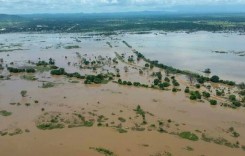
KARACHI, Pakistan (AA) – Torrential rains and flash floods have hit northern and northwestern Pakistan causing landslides and washing away several shops and bridges, officials and local media reports said on Wednesday.
At least five people have been killed and several injured in rain-related accidents in parts of the northwestern Khyber Pakhtunkhwa province, which borders neighboring Afghanistan, and in its capital Peshawar.
The roof of a house collapsed on the outskirts of Peshawar due to the heavy rains, killing three women and injuring two others, local Geo TV reported.
Meanwhile, two people were killed in the Mohmand Agency tribal region in another roof collapsing incident.
At least 10 shops and 55 boats were washed away in Charsadda district, located some 30 kilometers from Peshawar, due to swirling waters in Kabul River, still according to local media.
A bridge on Kurram River, which connects North Waziristan and the adjoining Bannu district, was also washed away.
Khyber Agency has also been hard-hit but residents of the town of Jamrud managed to rescue the passenger of four vehicles swept by flash floods.
Moreover, hundreds of passengers were trapped due to massive landslides in various areas of the Silk Highway, which connects Pakistan with China. Several parts of northern Pakistan have thus been cut off from the rest of the country.
Heavy rains also forced aviation authorities to suspend flight operations at Islamabad airport for at least four hours.
The Reshian and Lipa areas of Pakistani-administered Kashmir have also been cut off from the rest of the country as all roads have been blanketed with thick layers of snow.
The meteorological department has forecast more rains and snowfall for the next four days in northern and northwestern Pakistan.
www.aa.com.tr/en