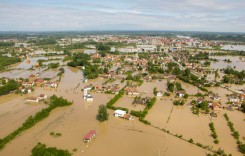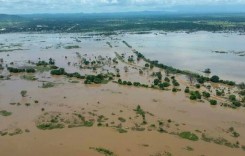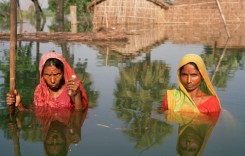
In a statement yesterday, 07 August 2015, International Organization for Migration (IOM) said that Afghanistan has been affected by over 30 floods and landslides in the past month, killing and injuring several people, displacing hundreds of families and damaging homes and farmland in 17 provinces.
IOM report that unseasonal snowmelts and heavy rains have raised river levels across the region, resulting in floods and landslides. During July, IOM recorded flooding, but also landslides and riverbank erosion, which damaged and destroyed over 2,300 homes and affected over 8,300 people.
On 6 July, a massive flood triggered by melting snow swept through Ayonak village in Badakhshan. Over 100 homes were damaged and destroyed, and 283 families were forced to flee to nearby villages.
Flood incidents continue to affect provinces throughout Afghanistan. Most recently 85 families (520 individuals) were displaced by a flood in Koyak village, Badakhshan on 29 July, 2015.
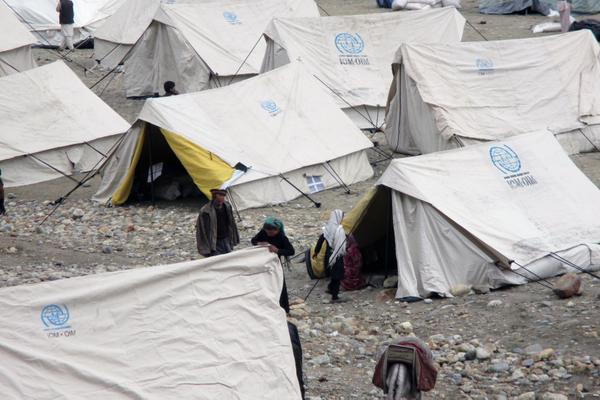
IOM has participated in joint assessments of 40 communities hit by floods and landslides, and carried out 19 aid distributions, assisting over 6,000 people. Affected families are provided with basic household supplies, clothing, blankets, solar lighting kits and emergency shelter based on their needs.
“Needs are greatest in the immediate aftermath of a disaster,” said IOM Afghanistan Humanitarian Assistance Programme Manager Gul Mohammad Ahmadi. “We try to respond as quickly as possible, even in remote and difficult to access areas, to ensure that people who have lost their homes and possessions get immediate help.”
In addition to responding to natural disasters when they occur, IOM also works with disaster-prone communities to strengthen awareness and resilience. This includes developing community disaster management plans, mapping local hazards and establishing early warning systems, as well as the construction of flood protection walls.
Twenty-one flood walls have been constructed in 14 provinces over the past two years. These walls are now protecting thousands of people, homes, livestock and crops.
Support for IOM’s natural disaster response and risk reduction activities in Afghanistan is currently provided by the USAID’s Office of Foreign Disaster Assistance and the Government of Japan.