Update: 10th July 2013
The flooding in Assam deteriorated further.
- As of Wednesday 10th July 2013, there were around 400 villages in 11 districts under water (Assam has 27 districts in total).
- The Assam districts hit by floods are: Dhemaji, Tinsukia, Chirang, Nagaon, Golaghat, Jorhat, Kamrup, Karimganj, Lakhimpur, Morigaon and Sibsaga.
- Since my last report (of 8th July below) 57 more villages have been completely flooded in Dhemaji, Chirang and Lakhimpur, forcing the population to evacuate.
- Nearly 250,000 people have now been displaced by the floods in Assam.
Original Report:
On June 28th I wrote that floods had caused damage to homes and crops in the Indian state of Assam. By the end of June around 50,000 people had been displaced and 500 hectares of farm land was under water.
By 2nd July the situation had worsened still and 3 relief camps had to be set up in Dhemaji to help those displaced by the floods. More than 3,000 hectares of farm land was under water at that point.
The flooding was caused by the heavy monsoon rainfall over the period of a few days at the end of June. Assam had already suffered from flooding in May this year after unexpectedly early monsoon rains flooded the Brahmaputra River.
As of 8th July 2013 the floods have now worsened. Further rainfall has meant that the River Brahmaputra and its tributaries had broken their banks, flooding as many as 11 districts in the state.
Levels of the River Jiadhol were so high the river burst its banks bringing further flooding to the Dhemaji district which had already suffered. According to official reports, about 9,774 people and over 2,000 hectares of farm land have been affected in Dhemaji district alone.
The other districts that have suffered include: Tinsukia, Chirang, Nagaon, Golaghat, Jorhat, Kamrup, Karimganj, Lakhimpur, Morigaon and Sibsaga.
The water level of the Brahmaputra at Neematighat in Jorhat district was dangerously high on Sunday evening and was expected to rise further.
Further relief camps have been set up. Another 2 have been set up in Dhemaji, and 5 in Jonai. An official from Assam’s disaster management said on Sunday 7th July,
“Five relief camps have also been opened at Chamgkong village in Jonai and about 850 people have taken shelter there. We have distributed relief material like rice, dal and salt among the inmates and no casualty has been reported so far.
The water levels of the Brahmaputra and other rivers in the district have been rising for the last 12 hours and the situation may worsen overnight.”
Kaziranga Park and Majuli Island
The flood waters threaten two famous Assam landmarks: the Kaziranga National Park and Majuli river island. The flood waters reached Kaziranga on Saturday 6th July, but have only reached the edges of the park so far. The park is a World Heritage Site and is home to two-thirds of the world’s great 1 horned rhinoceroses, as well as tigers, elephants and wild water buffalo. Park Directir, NK Vasu said:
“Floodwaters have started entering the park area, but the situation is under control. The water level of the Brahmaputra in Dibrugarh was 105.12 cm at 3pm on Sunday, but once it crosses 105.75 cm, the park will be inundated,”
The Majuli river island is said to be almost completely submerged. Majuli is India’s largest river island, and covers around 400 square kilometres in the Brahmaputra River. Over 75 families have been evacuated.
Media Coverage
The media coverage of the Assam floods has been sparse so far, especially outside India. This is in stark contrast to the Uttarakhand floods. This is fairly predictable and to a point understandable, since the floods in Uttarakhand involved so many deaths. But Assam has almost been ignored during this crisis. Over 100,000 people have been affected by the current floods there. Perhaps the media aren’t interested without the drama of flash flooding, cloudburst and Tsunamis. Possibly Assam is overlooked since the floods there are less dramatic – they are slow growing floods as in the floods that hit the Mekong Delta over the last few years (described here). Or more worrying, perhaps India and the world’s media are suffering from “Flood Fatigue” after the recent deluges in Uttarakhand, Germany and Central Europe and Alberta, Canada.
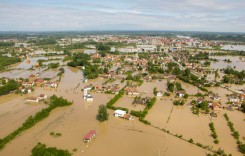
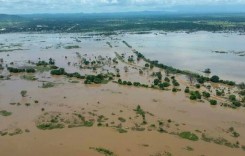
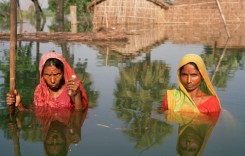
Below is a collection of photos and images from the Assam floods of July 2013. The full collection can be found on our Pinterest page here.
[alpine-phototile-for-pinterest src=”board” uid=”floodlist” board=”floods-in-assam-india-july-2013″ imgl=”pinterest” dl=”1″ dlstyle=”medium” style=”floor” row=”4″ size=”554″ num=”24″ border=”1″ highlight=”1″ max=”100″ nocredit=”1″]
Sources:
Times of India; IBN Live