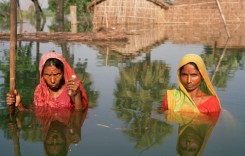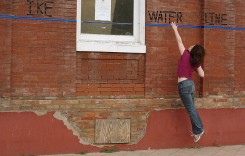
A new study by scientists from the Joint Research Centre – the European Commission’s in-house science service – looks at how a range of new, computerised global flood risk models are being used in practice to reduce flood impacts around the world.
New computer flood models, such as Global Flood Awareness System (GloFAS), can estimate the social and economic impacts of flooding, and help to protect communities from devastating floods and to reduce the economic losses associated with them.
The study, called “Usefulness and limitations of global flood risk models” was recently published in Nature Climate Change and uses case studies to review how different global flood risk models, such as the Aqueduct Global Flood Analyzer, the SSBN-flow model or GloFAS (Global Flood Awareness System), have been developed in a cooperation between research, government or aid organisations and how they are used in practice.
Global Flood Awareness System (GloFAS) and Flood Disaster Prevention
One example is how Global Flood Awareness System (GloFAS) is being used by the International Federation of Red Cross and Red Crescent Societies (IFRC) to plan for floods, enabling the organisation to take timely disaster prevention measures.
GloFAS was developed between the JRC and the European Centre for Medium-Range Weather Forecasts. It couples state-of-the art weather forecasts with a hydrological model and with its continental scale set-up it provides downstream countries with information on upstream river conditions as well as continental and global overviews. GloFAS is still in a pre-operational research phase but access to the daily GloFAS flood forecasts through a web interface was launched during the last Global Floods Partnership conference in May 2015.
It is currently being employed by the Red Cross/Red Crescent Climate Centre to test a forecast-based financing system in developing countries to trigger preventive actions before a flood occurs. These preventive actions include large-scale efforts such as distributing water purification tablets in entire villages. Such measures are beneficial to local communities even if the flood does not actually happen and help international aid organisations to make better use of their available funds.
In addition, GloFAS is being used by national authorities such as CEMADEN (Centro Nacional de Monitoramento e Alertas de Desastres Naturais) for those Brazilian river basins, where currently no national flood early warning system exists.
Limitations and Challenges of Global Flood Risk Models
Further case studies in the paper outline the benefits of global flood risk models as well as their limitations and provide an insight into the future challenges requiring interdisciplinary research and a close collaboration with the user communities.
Initiatives such as the JRC led Global Floods Partnership address those challenges by bringing together researchers and users of global flood risk models. In addition, those models and initiatives support the EU’s engagement in the recently adopted Sendai framework of Disaster Risk Reduction 2015-2030 and the EUs civil protection legislation.
The Global Floods Partnership (GFP), led by the JRC and the Dartmouth Flood Observatory, was kicked off during the 4th meeting of the Global Flood Working Group in March 2014. Its objective is the development of flood observational and modelling infrastructure, leveraging on existing initiatives for better predicting and managing flood disaster impacts and flood risk globally.