(Updated 23 August to include Senegal)
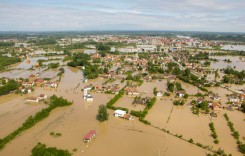
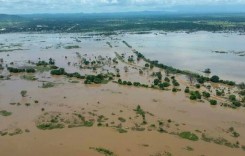
Heavy rainfall over the last few weeks has affected several countries in western Africa, including Senegal, Mali, Burkina Faso, Niger and Nigeria.
At least 12 people have been killed in Burkina Faso in floods caused by torrential rainstorms since June. The UN reported recently that at least 13 people have died in floods in Mali and 11 people have died in Niger since the start of July. The Niger Basin Authority reported of heavy rainfall in the Middle Niger during June and July. By 30 July, levels of the Gorouol River had reached their highest for over 50 years.
Flooding has also recently affected Kano state in Nigeria. Authorities in Nigeria have warned of potential flooding in 11 states, as well as areas close to the Niger river.
Mali
In a report of report of 31 July, 2016, the UN OCHA (Office for the Coordination of Humanitarian Affairs) in Mali said that this season’s flooding has caused 13 deaths, and affected more than 9,500 people (1,400 households) in the regions of Sikasso, Kolikoro, Segou, Mopti, Timbuktu, Gao, Kidal and Menaka.
Spaeking to local media, Seydou Doumbia, an official with the Ministry of Security and Civil Protection, said that the flooding has caused major damage and whole houses have been washed away.
The country suffers from severe flooding on a regular basis. In 2012, 63,000 people were affected and 21 killed. The following year, 43 died and 18,000 were affected. The UN say over 60,000 people at risk of flooding this year.
The OCHA say that humanitarian agencies have been pre-positioning emergency stocks in anticipation of flood risks, which can cover the needs in terms of water, sanitation and non-food items of more than 30, 000 people who could be affected by flooding,
Efforts have also been made in the prevention of malaria during the rainy season, a time of the year when an upsurge of the disease is usually observed. So far this year, 100 deaths and 498,000 cases have been reported. In the corresponding part of 2015, 68 deaths and 433,000 cases were reported, with Kidal region was of the worst hit areas.
Mali’s Ministry of Health and Public Hygiene and its partners are currently implementing a preventive treatment against malaria, through the “seasonal chemo-prophylaxis”, where drugs for prevention against malaria are administered to children during the most risky months to prevent them from developing the disease .
Burkina Faso
AFP are reporting that at least 12 people have been killed in Burkina Faso in floods caused by torrential rainstorms since June. The heavy rain and flooding has damaged thousands of homes and there are currently almost 10,000 left homeless. Over 26,000 people have been affected by the flooding and 35 people critically injured.
Poorly constructed buildings means that houses are prone to collapse during times of severe weather. Yipene Florent Bakouan, an official at Burkina Faso’s emergency services, told AFP that in the suburbs and shantytowns of Ouagadougou, around 9,900 people were left homeless. Two thousand of the displaced have been accommodated in local schools.
Senegal
Heavy rain fell in parts of central Senegal during late July causing flooding in Kaffrine region.
On 24 July, 175 mm (6.89 inches) of rain fell in Kaffrine town, capital of the region. Around 1,500 homes were flooded.
In Kouthia Thiambene, 30 km (18.6 miles) from Kaffrine, 200 mm of rain fell on July 24, destroying around 100 homes.
Niger
The UN Office for the Coordination of Humanitarian Affairs (UNOCHA) in Niger reported on 28 July that 11 people have died and 1,693 homes destroyed by floods in the country since June.
Nearly 30 000 people affected by the floods Heavy rains in some parts of the country that began in June. Significant material damage and loss of 19,536 head of cattle were also recorded by the Humanitarian Coordination Unit (CCH).
The worst affected regions are the desert areas of Tahoua in the west, where seven people died and 5,321 people were affected, and Agadez in the north where three people were killed and 18,448 affected, according to UNOCHA.
In a report of 02 August, the Niger Basin Authority said that flooding affected Middle Niger from June and that by the end of July, levels of the Gorouol River at Alcongui were the highest seen in over 50 years.
“Since then, there has been heavy rainfall in the Middle Niger, especially in the Sirba and Gorouol sub-basins on the right bank. In a week, from 25 July to 01 August 2016, a rise of 1.90 m was recorded in the Sirba station in Garbé Kourou. In two weeks, from 16 to 30 July 2016, a rise of 2.90 metres was recorded at the Gorouol station in Alcongui with a daily maximum water level of 406 cm on 30 July 2016. This maximum of 406 cm had never been recorded since the establishment of the station in 1957.”
Nigeria
Flooding affected parts of Kano state earlier this month, damaging thousands of homes and leaving 3 people dead.
Elsewhere in the country, heavy rainfall throughout the last few weeks has left ground saturated and increased the risk of flooding. In a statement of 08 August, the Nigerian Meteorological Agency (NiMet) warned of potential flooding in 11 states ( Akwa Ibom, Bauchi, Benue, Borno, Cross River, Delta, Kaduna, Kwara, Nasarawa, Yobe and Zamfara) between August and October this year.
NiMet said that heavy rainfall throughout June and July means that soil moisture has either reached saturation, or near saturation levels in some parts of the country.
Last week, Nigeria’s National Emergency Management Agency (NEMA) advised communities along the River Niger to evacuate to safer ground as levels of the river were expected to rise.
In a statement of 06 August, NEMA said:
“Following intense rainfall and rises in water level, the National Emergency Management Agency has advised communities along the river Niger to evacuate immediately to safer ground over the likelihood of floods that may occur at any moment from now.”
Rainfall in West Africa
Some areas of Mauritania, Mali, Guinea and Niger have seen around 400% more rainfall than normal during the last 30 days. According to NOAA Center for Weather and Climate Prediction, parts of western Niger have received 600% more rain than expected at this time of year.


NOAA Center for Weather and Climate Prediction report that as much as 300 mm of rain fell in some areas of West Africa between 04 to 10 August, 2016.
Over the last few days heavy rainfall has been reported in parts of Ghana, Mali, Burkina Faso and Senegal.
Wa in the Upper West Region of north Ghana recorded 230 mm of rain in 24 hours to 12 August.
In Mali, Kenieba recorded 52 mm and Yelimane 65 mm in a 24 hour period between 10 and 11 August. Kolda in Senegal recorded 162 mm during the same period.
Ouagadougou, the capital of Burkina Faso, recorded 88 mm of rain in 24 hours to 10 August.
Forecast
NOAA Center for Weather and Climate Prediction, in their Africa Hazards Outlook for 11 to 17 August say that further heavy rainfall is expected.
“Heavy and frequent rain over the past several weeks has led to substantial rainfall surpluses already triggering flooding over many local areas of West Africa . During the next week, significant rainfall is forecast, elevating the risk for flooding.”


Featured photo credit: Oxfam International