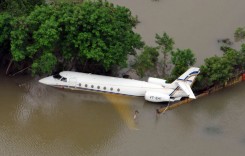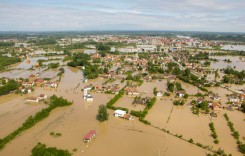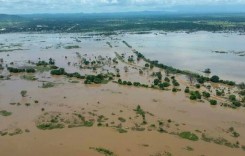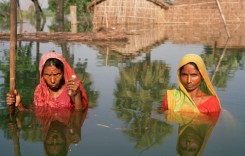
Some local media reports in Papua New Guinea are claiming that severe floods have affected over 10,000 people in New West Britain Province. Flooding has also been reported in the West Mekeo area in Central Province. The floods are a result if constant heavy rainfall in the area over the last few days.
New West Britain
According to the reports, houses in dozens of villages have been hit by the floods in New West Britain. The worst affected areas are Central and East Nakanai. The Provincial Disaster Centre says that initial assessments show that bridges have been damaged or completely washed away. Culverts in Tiauru, Sege, Manari and Bala have also been badly damaged. Roads have also suffered some damage, with parts of the Kimbe-Bialla Highway blocked and the main highway at Salelebu government station completely washed out. Blocked roads are likely to affect the areas palm oil producers.
Some of the affected areas are extremely remote, particularly villages in the region of the Luvi and Ala rivers. The Provincial Disaster Centre is yet to contact residents in these areas.
Central Province
Elsehwere in papua New Guinea, heavy rains have resulted in the Angabanga River overflowing in the West Mekeo area in Central Province. The village of Gagaifua is said to have been completely washed away. No fatalities have been reported. The village included around 17 houses, a church, school and store, as well as livestock and crops such as betel and banana. It was home to around 300 people, all of whom have now moved to higher ground.
Map:
[mappress mapid=”227″]
Flooding and Climate Change in Papua New Guinea
Papua New Guinea is vulnerable to both inland and coastal flooding. The country suffered from severe coastal flooding in 2008. as many as 75,000 people were though to have been displaced from 8 different provinces.
According to UNDP
In Papua New Guinea’s North Coast and Islands regions, coastal flooding is the most important climate change-related hazard. It threatens both coastal populations and important economic centers, including provincial capitals and economic. In the hinterland areas, climate change-related inland flooding is the most pressing hazard with the largest potential for widespread damage. The lack of water impoundments and/or water reticulation schemes serves to increase the vulnerability of the largely agrarian communities.

Sources: Post Courier PNG; EMTV; UNDP