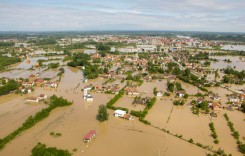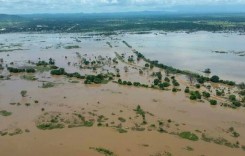
Zimbabwean authorities are evacuating hundreds of families from an area in Masvingo province, south of Harare, who are threatened by floodwaters and the possible collapse of the incomplete wall of the new Tokwe-Mukorsi Dam.
The dam, to be the largest in Zimbabwe at 1.8 billion cubic metres (63.6 billion cubic feet), was due for completion in December 2013, but progress has been delayed by a number of factors, including delays in funding for relocation of affected families.

Whilst reports are circulating that the dam wall has partially collapsed, the site engineers have urged people not to panic, saying that the floods were caused by huge volumes of water that have forced their way through the dam wall that is still under construction.

Albert Muyambo, chief executive officer for Zimbabwe National Water Agency (Zinwa) said that the reason for this was “because the province received double the amount of rain it usually gets and this was not anticipated”, but added that “engineers are working flat out to resolve the problem and are currently raising the level of the dam wall so that water will not spill over”. (Quite how this might be achieved was not explained).
Elsewhere it has been reported that the dam wall had developed cracks and shifted slightly due to rising water levels over the past few days.
This perhaps arose from the comment of Masvingo Provincial Minister of State who, after touring the dam on Tuesday 4 February, had said, “There is high danger that if water continues to rise the dam wall can crack and flood thousands of people and property downstream”.
Nevertheless, Local Government, Public Works and National Housing Minister Dr Ignatius Chombo urged communities downstream of Tokwe-Mukorsi Dam to move at least two to five kilometres (1.25 to 3 miles) away from the Tokwe River. At least 400 families needed to be evacuated immediately and a further 4 000 would be moved in due course, the Minister said.
On completion, the dam is set to improve the livelihood of more than 3 000 families and change the face of the drought prone Lowveld. The dam would have the capacity to provide water to irrigate 25000 hectares (96 square miles) of land in Masvingo and increase sugarcane output by 15 percent, as well as generating 6MW of hydro-electricity.
Elsewhere in Masvingo province, ten men were stranded in trees for more than eight hours on Sunday when marooned by a flash flood while walking along the shore of the Ruti Dam. The men, who had been walking towards Gutu early on Sunday were eventually rescued by the Air Force of Zimbabwe (AFZ) at about 4pm.
Masvingo provincial police spokesperson Chief Inspector Peter Zhanero said a Chiredzi couple spent a night on an island on Mungwezi River when they too were trapped by suddenly rising water levels. The couple left the island when water levels subsided the next day.
23 houses in Chindundu Village on Marriot Ranch in Mwenezi collapsed following incessant rains in southern Masvingo. Masvingo deputy provincial administrator Mr Goden Chipika said the houses were largely built with poles and dagga (adobe) “which makes them susceptible to collapsing in the event of too much rain.” In addition, a number of people have been injured, numerous roads and bridges have been washed away and a significant portion of crops in many of the districts have been damaged.
“The heavy rains have been falling in the area since last week and some non-governmental organisations such as Red Cross are assisting the affected people with tents for temporary shelter,” he said.
The province normally receives 450mm (18”) of rainfall per annum, but this year it has already exceeded 850mm (33”), causing widespread flooding. The floods have posed danger to people living in Ngundu, Gororo, Triangle and Nyahombe.
Map:
[mappress mapid=”206″]
Sources: Business Week; Daily News Zimbabwe; All Africa; Herald Zimbabwe; Salini