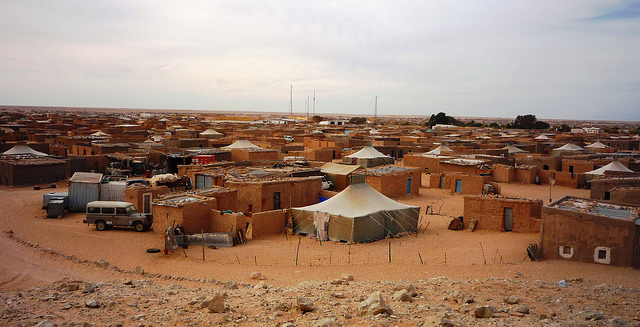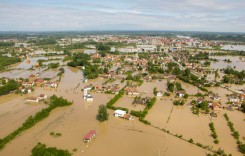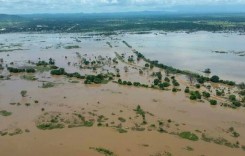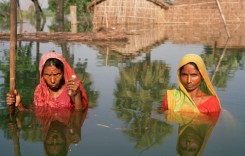
In the last week of October, torrential rains in the west of Algeria brought severe flooding to the normally arid Tindouf region.
According to International Federation of Red Cross and Red Crescent Societies (IFRC ) although generally sparsely populated, some 90,000 people living in refugee camps in the region were affected, 35,000 of them severely. More than 17,000 homes were damaged by the flood waters and torrential rain, half of which were totally destroyed.
Since the onset of the disaster, Red Crescent teams have been on the ground providing assistance to those in greatest need. Many families lost practical items like mattresses and water containers in the deluge, and a large number of latrines have also been destroyed or rendered unusable. With stagnant water left behind by the floods, Red Crescent volunteers have been actively promoting hygiene practices, in an effort to prevent the spread of diseases.
In response to the crisis, the Red Crescent has collected more than 1,400 tonnes of food items, including staples such as rice and lentils, from communities that were not affected and have provided this relief to those in need. Non-food items, including mattresses, blankets and clothing have also been provided to affected families.
Sadrack Bertrand Matanda, IFRC disaster response delegate visited the affected region. She said: “These teams are working in close cooperation with the UNHCR and World Food Programme to provide assistance to meet immediate needs, such as through distribution of food”, adding that “Over the past month, the assistance Red Crescent volunteers have provided has been essential, but resilience needs to be built in these communities.”
US Announces $4 million in Humanitarian Assistance
Yesterday the United States announced a contribution of more than $4 million in humanitarian assistance to help meet the acute needs of Sahrawi refugees in response to catastrophic flooding in the camps in Tindouf, Algeria.
This new contribution includes support for the Office of the UN High Commissioner for Refugees, the World Food Program, and the UN Children’s Fund. These funds will be used to support the reconstruction of shelters, schools, and health clinics. They will also help replace food rations that were destroyed by the flooding.
The Red Cross say that the months ahead will likely be particularly difficult for people in these refugee communities and building the resilience of the communities living in these refugee camps poses a significant challenge for humanitarian agencies.
The Tindouf region is normally one of the most driest and isolated in the country, making life extremely difficult for those who live there even at the best of times. During this disaster, much of the communities’ livestock was taken by the flood-waters, making life even tougher.