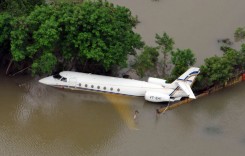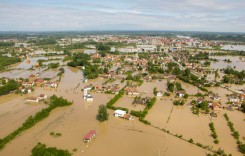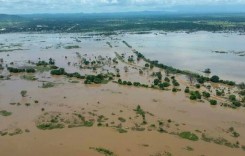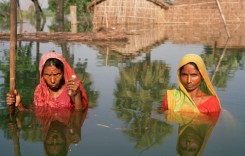
In a statement of 04 March 2015, the International Federation of Red Cross and Red Crescent Societies (IFRC) said that the current situation in for flood victims in Malawi is precarious.
With further heavy rains expected to fall in already saturated parts of Malawi over the coming week, the situation could become worse as more people seek shelter in the temporary camps that have been established along the periphery of the flood waters.
Cramped Conditions in Displacement Camps
230,000 people were displaced by the floods, some of the worst seen in the country in recent years. Michael Charles, IFRC’s acting regional representative in southern Africa said that accommodation in some camps for those displaced is extremely cramped.
“The situation is precarious,” said Michael Charles, IFRC’s acting regional representative in southern Africa. “In some camps, family tents that were designed to accommodate six people have been housing 30 individuals. In the larger tents, designed to accommodate between 20 and 30 adults, up to 100 people have crammed inside. Everyone is desperate to find shelter, even if it means living virtually on top of their neighbours.”
IFRC to Scale Up Response
IFRC is ramping up its efforts to assist those displaced by the floods and aims to assist more than 46,000 people.
“When the flooding began in January, the scale of the emergency was still unclear,” said Charles. “Together with the government and other partners, we conducted assessments and now know that at least 230,000 people have lost their homes and are struggling to survive. It is vital that we scale up our activities if we are to safeguard the lives of these vulnerable people and ensure that they survive this flood and future environmental extremes.”
More Emergency Funding Required
With the scope of the disaster becoming more clear, IFRC has revised its emergency appeal upwards and is now requesting 4 million Swiss francs in emergency funding to support activities related to the provision of shelter, health care, access to clean water and proper sanitation, and reuniting families separated by the flooding.
Building Resilience
In addition to providing for the immediate needs of 46,712 people, the revised appeal seeks to address the resilience and longer-term development of affected communities. The appeal will be sufficient to help 100 families build more resilient permanent houses as a pilot project for further flood-resistant housing.
“Building flood resistant shelter is a key component of the revised appeal,” said Naemi Heita, IFRC regional disaster risk management coordinator. “Malawi experiences flooding every year, and we want to ensure that people are better prepared for future flooding. We also want to minimize the impact the flooding has had on their livelihoods.”
Distribution of Seeds and Root Cuttings
Up to 638,000 people lost their crops during the floods, leaving them unable to feed themselves or their families. To help compensate for this loss, and improve food security and nutrition in affected areas, the Red Cross is distributing root cuttings and seeds of basic food crops, such as cassava and sweet potato, to all households with access to land.
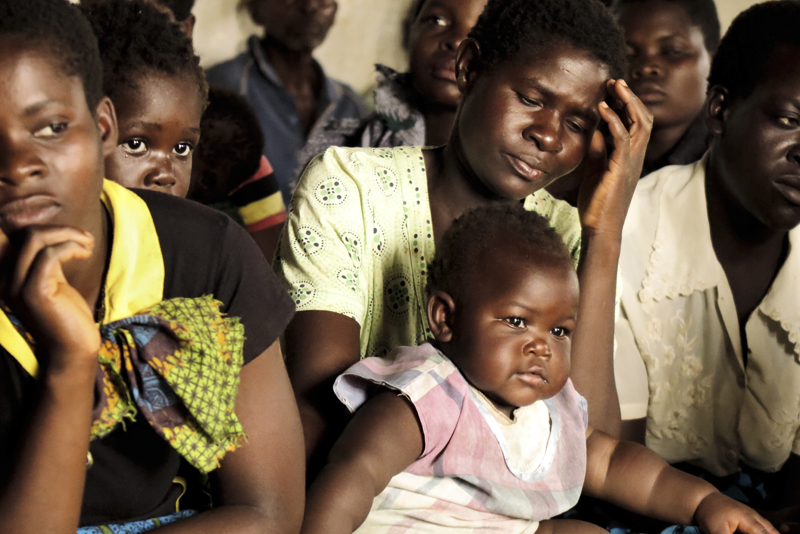
southern Malawi, Feb 2015