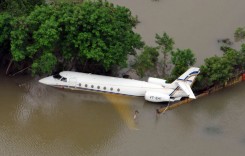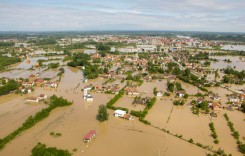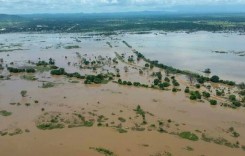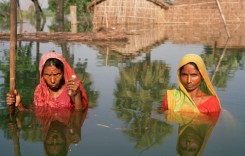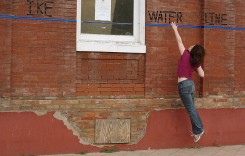
According to Julián Báez, director of Meteorología e Hidrología in Paraguay, the levels of the Paraguay River in Asuncion have now started to fall. They peaked on Tuesday 8 July 2014 at 7.35 metres, then fell by 1 cm the next day. The measurement may be small, but levels are at least falling. In the lower basin area river levels are not expected to peak for another 2 days. In Pilar, the level stands at 8.43 metres and is expected to rise further.
El Niño Could Bring Similar Floods by November
Snr. Báez also said that he expected river levels to continue declining until October or November, when the rainy season starts. Forecasters believe Paraguay will see heavy rainfall in the last 3 months of this year as a result of El Niño. In other words, we could be seeing a repeat of the mass evacuations across the country in less than 6 months.
250,000 Affected across 10 Departments
Despite falling river levels, Paraguay’s National Emergency Secretariat (La Secretaría de Emergencia Nacional – SEN) reported yesterday that the number of people affected by the flooding of the Paraguay and Parana rivers amounted to almost 250,000. Those affected are in Asuncion, and the departments of Alto Paraguay, Concepción, Presidente Hayes, Boquerón, San Pedro, Alto Paraná, Central, Ñeembucú and Misiones.

16,713 Families in Asunción Affected
SEN says there are currently 16,713 families in Asunción that have been affected by the floods. Those displaced are living in 116 settlements scattered throughout the city. The number of displaced has exceeded capacity and companies in the private sector have stepped in to help.
Some of the displaced in Asunción are being temporarily housed in a 4.5 hectare area owned by the Ports authority (Administración Nacional de Navegación y Puertos – ANNP). The camp has 800 tents, health care and even a temporary school. In the district of Santísima Trinidad, Paraguay, COPAC, the communications company, have set up a 2 hectare camp for around 50 families.

Parts of Chaco Region Still Cut Off
Elsewhere in the country, some of the rural areas of the Chaco region are still completely cut off by floods and landslide debris, making it impossible for relief workers to reach those affected by the floods other than by airlift. It is thought that around 10,000 people in this region have yet to receive any help or aid since the floods began.
Paraguay has received help and finance for the flood disaster from international partners and humanitarian agencies including the Pan American Health Organization (PAHO) and the Red Cross.