There are fears that two new dams in the Brazilian state of Rondonia could have caused the extensive flooding seen in parts of Bolivia and more recently Rondonia in Brazil.
The Santo Antonio and Jirau dams are on the Madeira River, said to be the Amazon’s largest tributary. Recent levels of the Madeira River have been at record highs. On Tuesday 4 March river levels stood at 18.75 metres.
On Monday 11 March, federal and state prosecutors in Brazil forced an injunction on the operators of the two hydroelectric dams and the federal court ordered environmental impact studies to be done again. Energia Sustentável do Brasil operates the Jirau dam. The San Antonio dam is jointly owned by Eletrobras and Cemig (Cia Energética de Minas Gerais). The operators have also been ordered to distribute food and other aid to those affected by the floods in Rondonia.
Both dams are “run-of-the-river” types, which only require small reservoirs when compared to other hydroelectric dams. The operators say that the dams therefore are not responsible for the flooding which was instead caused by heavy rainfall.
However, way back in 2007, after the announcement of the new projects, an article in Water World said:
Although investors claim the dams will employ “run–of–river” type technology to minimize flooding and estimate only 529 sq. km will be flooded, environmentalists disagree, claiming the project will affect a total area of almost 1 million sq. km, including parts of Brazil, Bolivia and Peru. They also point to the direct conversion of some 80,000 sq. km of forests into associated agriculture development.
Critics of the Dams
Critics say the initial environmental impact studies included overly conservative river flow calculations. Those calculations, based on records between 1967 to 2008, showed a historical maximum flow thought to be much lower than more recent calculations.
Furthermore, critics fear that the dams now prevent the natural flow of rivers and retain floodwaters for a longer time and in larger volumes.

Photo: Cley Medeiros
Bolivia’s Concerns
Bolivia’s President Evo Morales has ordered an investigation to determine whether the severe floods are related to the Brazilian dams. On Friday 7 March, Brazil’s Minister of Foreign Affairs, Luiz Antonio Figueiredo, arrived in Bolivia to initiate discussions with technical support groups from both countries. A report on the effects of the two dams is expected in about 3 weeks.
Flooding Spreads to Brazil – 11,000 Displaced
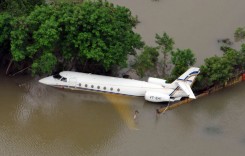
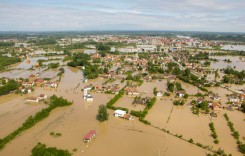
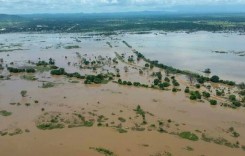
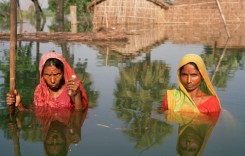
Parts of Bolivia, in particular the department of Beni, which lies on the border next to Brazil, have been under water for several weeks. However, the Acre and Madeira Rivers have now overflowed in Brazil and have flooded areas of the states of Rondonia and Acre. Reuter’s says that 11,000 people have been displaced in Rondonia. A state of emergency has been declared. The worst affected areas include the cities of Porto Velho, Guajarámirím and Nueva Mamoré. Rio Branco city in Acre State has also been badly affected.
In a report on the Bolivia floods of 27 February, 2014, FloodList noted that levels of the Mamoré River (a tributary of the Madeira) were so high they would soon threaten Rondonia in Brazil.
Flooding in Amazon Basin Isolates Rondônia State of Brazil: http://t.co/B1oBJ4ypcm pic.twitter.com/GuhtufsT2Q
— The Rio Times (@TheRioTimes) March 6, 2014